 Canada’s recent changes to citizenship-by-descent rules have opened the door to citizenship for many people who were previously excluded because they were born outside Canada beyond the first generation. But the rollout of the new law has also produced confusion and anxiety, after some newly approved citizens were asked to return their citizenship certificates while the government re-examines their files.
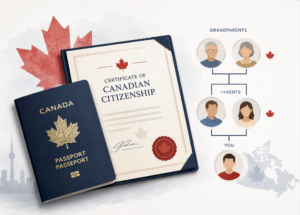
The change came through Bill C-3, which took effect on Dec. 15, 2025. Before then, Canadian citizenship by descent was generally limited to the first generation born abroad. In practical terms, this meant that a Canadian born in Canada could usually pass citizenship to a child born outside Canada, but that child could not necessarily pass citizenship to the next generation if the family continued to live abroad.
That rule had long been criticized for creating so-called “lost Canadians” — people with real Canadian family connections who were nevertheless denied citizenship because of technical provisions in earlier laws. In 2023, the Ontario Superior Court found that parts of the first-generation limit were unconstitutional. The federal government did not appeal, and Bill C-3 was introduced to broaden access to citizenship by descent.
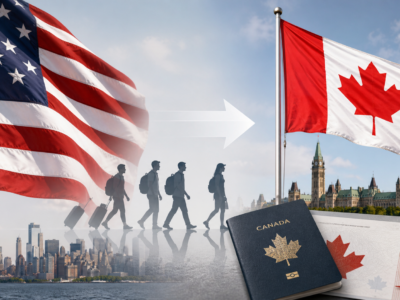
The new law is especially important for families with Canadian roots in the United States and elsewhere. People born abroad before Dec. 15, 2025, may now be Canadian citizens if they were born to a Canadian parent, even if that parent was also born outside Canada. For children born abroad after the law came into effect, there is a new test: the Canadian parent born abroad must generally show a “substantial connection” to Canada, defined as at least 1,095 days — three years — of physical presence in Canada before the child’s birth.
The changes have led to a surge of interest, particularly among Americans with Canadian ancestry. Many applicants appear to view Canadian citizenship not as an immediate plan to move, but as a valuable family option — a way to preserve mobility, educational possibilities, and a future connection to Canada.
But the new system has also exposed a problem: documentation. Some people who recently received citizenship certificates have reportedly been told by Immigration, Refugees and Citizenship Canada to return those certificates while their files are reviewed. This is not necessarily equivalent to revocation of citizenship. Rather, IRCC appears to be questioning whether some certificates were issued on the basis of records that fully prove the applicant’s line of descent.
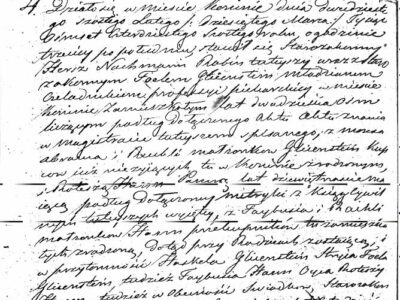
The issue serves as a reminder that citizenship by descent depends not only on family history but on documentary proof. A family story, a census entry, a baptismal record, or an old newspaper item may help establish a trail, but IRCC may require official evidence that meets its standards.
For Canadians and descendants of Canadians abroad, Bill C-3 is a major expansion of citizenship rights. But the recent certificate reviews show that the process is still evolving. Anyone applying under the new rules should gather the strongest possible documentation for every generation, keep copies of all submissions, and be prepared for further questions from IRCC.
The promise of the new law is significant, but as genealogists know well, family history becomes official history only when the records can prove it. ♦