
Genealogists sometimes encounter a maddening problem when a relative seems to vanish under the name you know. Sometimes it’s because the surname has been legally changed, or an alias used for employment, business, military service or just convenience.
In many cases the person who changes their name still keeps at least a few anchors: an address, an occupation, a spouse, a cluster of friends, a business partner, a synagogue or church, or a consistent age and birthplace. Your job is to stop searching only for a name, and start tracking a person.
For Ontario research, one major dividing line is 1939.
Before that year, people could usually simply start using a new name, and if they wanted something more official they might file a “deed poll” in court, but this was not mandatory and the surviving record trail is uneven.
After 1939, Ontario required a formal name change process through the courts, creating much more consistent documentation.
Before you dive into name-change sources, make sure you kow the details, such as address and occupation, that will allow you recognize your relative after the rename.
In Toronto, address is an especially powerful search variable because you can follow a person through city directories year by year and also use the address to locate them in “street listings” when they disappear from the alphabetical section.
Spouse and children are also excellent anchors, because families often keep a stable cluster even while the surname shifts.
Have you found the subject’s birth, marriage or death record? If so, the change of name may be annotated on the actual document.
If your relative lived in Toronto, city directories are often the most reliable way to catch the exact year a name transition occurred, because directories are annual, structured, and full of cross-checks.
The Toronto Reference Library holds Toronto directories from 1833 to 2001, and the same run has been digitized by the Toronto Public Library and Internet Archive, which is a gift for long-range searches.
Here’s the key technique. Don’t only search the alphabetical name section. Use the street-and-number section (“street directory” or “reverse directory”) to track the occupants at the exact address across consecutive years. If you see “Sam Rosen, tailor” at 123 Example St. one year, and the next year the same address contains “Samuel Ross, tailor,” you’ve likely found your person “after” the change. Then you work backward and forward to see how the directory itself “introduces” the transition.
If your relative ran a business, always check the business and classified sections. A proprietor might keep the old-name branding even after adopting a new personal surname, and that overlap can be the bridge you need.
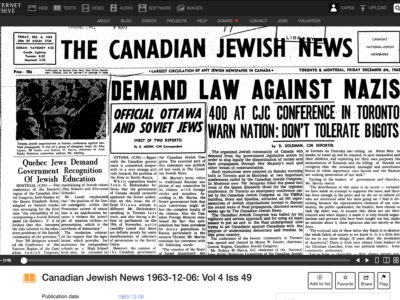
For Toronto, the Internet Archive hosts many specific years of Might’s Toronto directories, such as 1920 and 1970, which you can use as direct examples of what you’re looking for and how the internal structure works.
Newspapers often provide official notices of name changes. For Toronto families, the two giants are the Toronto Star and the Globe and Mail; both have been digitized and are available at Newspapers (dot) com or for free through the Toronto Public Library.
Try also searching by address, spouse name, business name, or a distinctive occupation. If you suspect the person continued living at the same address, the address itself can be a powerful search term in newspapers, especially for classifieds, business ads, and legal notices.
If your relative legally changed their name in Ontario, the Archives of Ontario provides a clear pathway for finding records, and it differs depending on the period.
For earlier cases, you can search the Archives’s Supreme Court Central Office Matter Index volumes on microfilm for the years 1850–1946, which include deed polls among many other matter types. Those index volumes are arranged by the person’s previous name, and once you identify the docket number and year, you can request the docket record itself (RG 22-5081).
For 1939 onward, the Archives notes that formal change of name requests were required before a judge at a local County or District court. If approved, the court order was sent to the Office of the Registrar General, and the filings often contain genealogically useful details such as birth information, parents’ names, and addresses.
Modern Ontario name changes, since roughly 2010, are published as notices in the Ontario Gazette, and Ontario’s current Gazette site supports keyword searching and archived issues online.
Ontario also publishes an open dataset called “Notices of Name Changes,” derived from the Ontario Gazette notices, which is extremely useful for systematic searching and data work.
Even if your relative never filed a formal Ontario name change, federal interactions can expose both names.
Naturalization and citizenship-related records can help you pinpoint a changed name. Library and Archives Canada provides a naturalization database built from lists published in the Canada Gazette and related federal publications, and those entries can give you a firm identity handle that sometimes connects name variants across time.
Immigration and border-entry records, now widely available, are another big category. Passenger lists and border-entry series can show a person under an original name at arrival, and then later under an adopted name when they cross again, sponsor relatives, or appear in later documentation.
Surnames often change by compression, spelling normalization, or phonetic approximation. This means your best searches are frequently not exact-name searches. Use wildcard-friendly search interfaces when you can, and be tolerant of variant spellings, especially in newspapers and directories where the information was gathered or typeset by someone other than the subject.
Finally, remember that family members often shift as a cluster. If your person is too “quiet” in the records, track a spouse, sibling, or adult child through the same period. The family member with a more stable or distinctive name can lead you back to the renamed individual. ♦